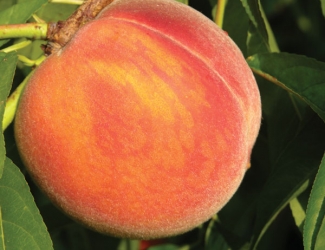
Flamin’ Fury® PF 19-007 PP#17,578
A new offering from Paul Friday's Michigan-based breeding program. Fruit is very large and highly colored. Harvests the same season as Loring. Tree is productive and blooms a little later, making it more tolerant to spring frost damage. A high degree of resistance to bacterial spot has also been observed in this variety.
Royalty: $1.75/tree
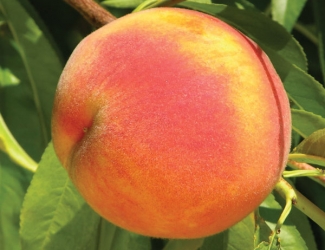
Flamin’ Fury® PF 23

Flamin’ Fury® PF 24-007
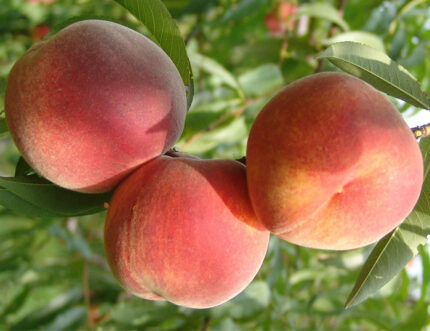
Flamin’ Fury® PF 27A
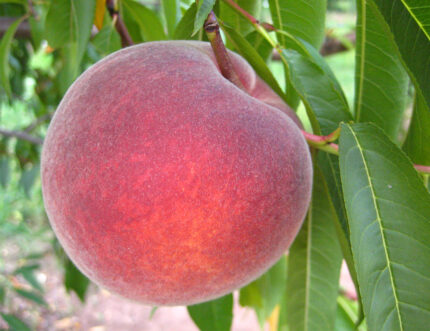
Flamin’ Fury® PF 28-007 PP#14,778
Flamin’ Fury® PF 9A-007 PP#15,498
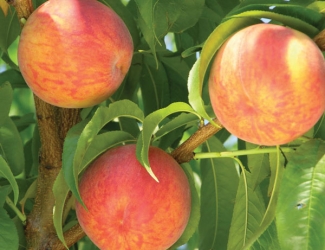
Flamin’ Fury® PF Lucky 13

FlavrBurst™ (KV000398 Cltv.) PP#21,378
FlavrBurst™ is a new variety introduced by USDA-ARS in Kearneysville, West Virginia. This peach has consistently shown great size and a beautiful red color on a yellow background. Perhaps the most favorable quality of FlavrBurst™ is its exceptional flavor, exhibiting a sound balance of acid and sugar. The tree is very productive and crops annually. May be somewhat susceptible to bacterial spot and should be trialed before planted heavily where this is a serious problem.
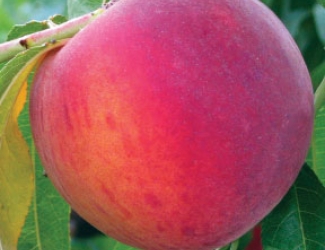
GaLa Peach
A large, freestone peach with a melting texture. It has good flavor and colors nicely to a deep red over a yellow background. GaLa harvests five to six days before Redhaven, filling an important season between Sentry and Redhaven. The trees crop annually and are somewhat resistant to bacterial spot. GaLa was a joint release from the Louisiana Ag Experiment Station and USDA-ARS in Byron, Georgia. It has been tested for many years and has adapted well to both central and southern regions.
Galactica (NC9842 Ctlv.) PP#17,118
Galactica is a mid-season, white-fleshed flat peach that picks right after Saturn. The fruit is medium-large in size and easy to pick with minimal stem pull issues. The flesh is firmer than Saturn and has excellent, low acid flavor. The trees are productive and show high tolerance to winter injury. A great selection to extend the Saturn season.
Royalty: $0.50/tree
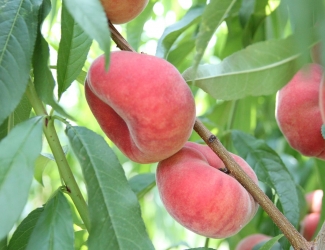
Galaxy
Introduced by USDA-ARS San Joaquin Agricultural Sciences Center, Parlier, California, Galaxy is an outstanding flat peach for eastern growers. The fruit is white-fleshed and very firm with outstanding eating qualities. One of the remarkable qualities of Galaxy is its fruit size, developing fruit 2.-3 inches in diameter.